

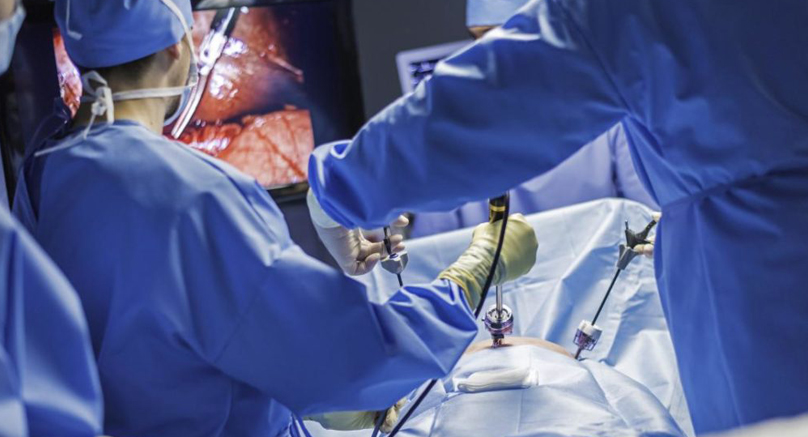
Advanced laparoscopic urology surgeries represent the latest evolution in minimally invasive surgical care for urological conditions. These procedures are performed using high-definition cameras, specialized instruments, and small incisions, allowing surgeons to operate with enhanced precision and minimal trauma to the body.
Also known as keyhole surgery, advanced laparoscopy has significantly improved patient outcomes by reducing pain, shortening hospital stays, and enabling faster recovery compared to traditional open surgeries.
Removal of a kidney using laparoscopic techniques. It may be:
A reconstructive procedure to correct ureteropelvic junction (UPJ) obstruction, improving urine flow from the kidney to the ureter and preserving kidney function.
Surgical repositioning of the ureter into the bladder to treat conditions like vesicoureteral reflux or ureteral injury.
Complete removal of the prostate gland using minimally invasive techniques, primarily for localized prostate cancer.
Removal of the urinary bladder, usually performed in patients with invasive bladder cancer, followed by urinary diversion procedures.
Removal of adrenal glands for tumors or hormonal disorders, performed with minimal surgical trauma.
Advanced laparoscopic urology surgeries offer a perfect combination of precision, safety, and faster healing. With experienced surgeons and modern technology, patients benefit from effective treatment outcomes with minimal disruption to their daily lives.