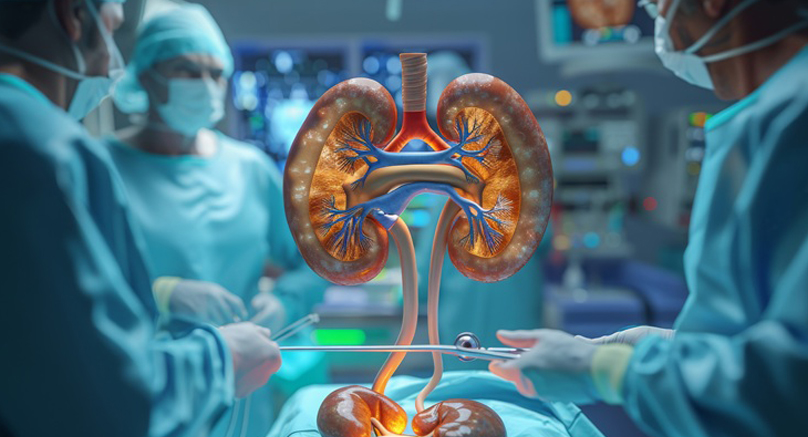
RIRS (Retrograde Intrarenal Surgery) – Laser Stone Surgery
RIRS (Retrograde Intrarenal Surgery) is an advanced, minimally invasive procedure used to treat kidney stones using laser technology. It is performed without any cuts or incisions, making it one of the safest and most comfortable options for stone removal.
In this procedure, a flexible ureteroscope is passed through the natural urinary pathway (urethra → bladder → ureter → kidney) to reach the stone. A high-energy laser is then used to break the stone into fine particles, which are either removed or pass naturally through urine.
Who is Suitable for RIRS?
- Patients with small to medium-sized kidney stones (usually up to 2 cm)
- Stones located in difficult-to-reach areas of the kidney
- Patients unfit for open surgery or PCNL
- Recurrent kidney stones
- Patients with bleeding disorders (as it involves minimal bleeding)
Procedure Details
- Performed under general or spinal anesthesia
- No external incision is required
- Flexible ureteroscope is guided to the kidney
- Laser fiber is used to fragment stones into dust-like particles
- A Double-J (DJ) stent may be placed temporarily for drainage
Advantages of RIRS
- Completely scarless procedure
- Minimal pain and discomfort
- Short hospital stay (often same-day discharge)
- Quick recovery and early return to daily activities
- Safe and effective for complex or recurrent stones
Recovery
- Patients can usually resume normal activities within a few days
- Mild burning during urination may occur temporarily
- Increased fluid intake is recommended to flush out stone fragments
- Follow-up may be required to remove the DJ stent if placed
Risks and Complications
- Urinary tract infection
- Minor bleeding
- Ureteral injury (rare)
- Temporary discomfort due to stent placement
Why Choose RIRS?
RIRS Laser Stone Surgery is a modern and highly effective solution for kidney stone management, especially when non-invasive methods like ESWL are not suitable. With its high success rate, minimal complications, and faster recovery, it has become a preferred choice for both patients and urologists.

